

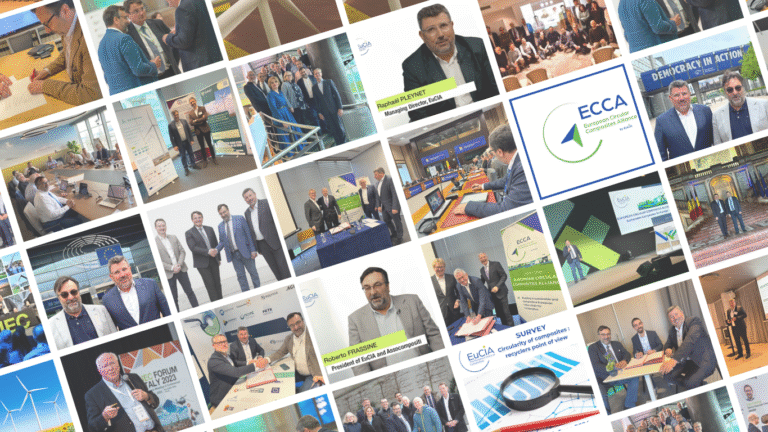
 EuCIA leads the REFRESH work package focused on communication, dissemination, and exploitation.
Headquartered in Brussels, the European Composites Industry Association (EuCIA) represents European national composites associations and industry-specific sector groups at EU level.
With the support of its members, EuCIA’s initiatives aim to ensure the sustainable growth and continued competitiveness of more than 10,000 companies and an estimated 150,000 employees involved in composites manufacturing across Europe.
EuCIA’s role in REFRESH
In the REFRESH project, EuCIA is leading Work Package 7: Dissemination, Communication and Exploitation, which focuses on making results of the project available to key stakeholders from the market, industry, science, and policy domains.
This WP’s activities include:
- Planning and development of the exploitation, dissemination and communication activities;
- Engagement of key stakeholders and their involvement to steer the process of long-term project exploitation, creating real business opportunities;
- Management and distribution of the knowledge to maximise the return on research investment;
- Granting the maximum exploitation potential to partners, preventing disputes related to results ownership;
- IPR management for the innovations developed, and consequent exploitation path.
We spoke to Raphaël Pleynet, Managing Director of EuCIA.
What is EuCIA’s strategy?
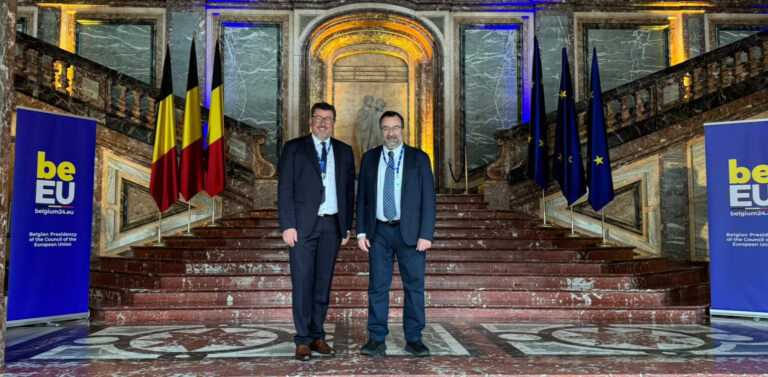
EuCIA’s leadership: managing director Raphaël Pleynet and president Professor Roberto Frassine.
Our strategy is based around five goals:
- Position: Explain and promote the contribution of composites and the composites industry to European society;
- Advocate: Provide expertise to decision-makers in defining EU standards and legislation;
- Facilitate: Support the growth of the composites industry and the creation of a sustainable business environment in Europe;
- Educate: Support education of designers, engineers and students to advance understanding of composite materials;
- Network: Provide a platform for EuCIA members to network and share knowledge and experience.
Sustainability has always been a key theme running through all of EuCIA’s activities.
What are your main initiatives related to sustainability?
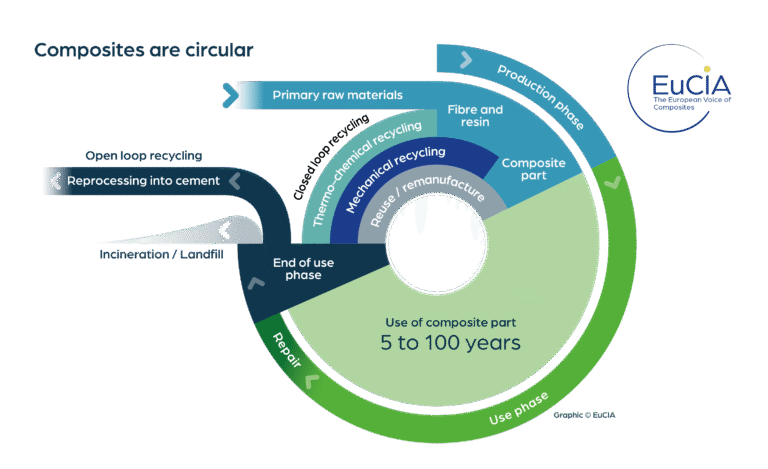
Composites are circular materials.
Communicating the many benefits of composite materials over established materials has always been a major focus for EuCIA. We must continue to emphasise that lightweight, high performance, durable and energy-efficient composite products make a substantial contribution to decarbonisation over their long service lives, fully supporting the EU’s target of climate neutrality.
Demonstrating the circularity of composite materials is also increasingly important. We must demonstrate to regulators, industry stakeholders and end-users that after their long use phase there are numerous ways of extending the life of composites through the circular economy strategies of reuse, repair, remanufacture, and repurpose. We must also explain that when these options are finally exhausted, composites can be recycled through both open loop and closed loop processes.
We are actively working to address barriers to greater composites circularity, encouraging the collaboration of all stakeholders in a cross-sector approach. With this aim, EuCIA, in partnership with JEC Group, launched the European Circular Composites Alliance (ECCA) in March 2025 at the leading international composites event JEC World 2025. The overwhelmingly positive response to this initiative and the engagement of so many organisations clearly demonstrates the composites industry’s commitment to accelerating the transition to a circular economy.
What is EuCIA’s involvement in R&I projects?
Innovation and collaboration are key drivers for the composites industry. The EU’s research and innovation programmes provide a framework for developing the composite materials and technologies of the future. EuCIA is currently a partner in four EU-funded projects. REFRESH, EOLIAN, and MAXBlade are developing sustainable composite solutions for the renewable energy sector, while PLEIADES is focused on the aerospace sector.
Partnering in EU-funded projects expands EuCIA’s network of research, industry and policy stakeholders and provides valuable insights into cutting-edge composites technologies and new circular models.
Life cycle assessments (LCAs) of the proposed solutions are a key element of these projects. This aspect aligns with our own efforts to provide improved LCA data for composite materials through our Eco Impact Calculator cradle-to-gate LCA tool.
What attracted EuCIA to join the REFRESH project?
Wind energy is a key sector for the composites industry. Composite materials are essential to the manufacture of the larger, more efficient wind turbine blades that are needed to increase Europe’s wind energy capacity. But the thermoset composites traditionally used in blades are inherently difficult to recycle and industrial-scale recycling routes need to be established in order to manage the growing number of blades reaching the end of their service life.

With the REFRESH partners at Vestas’ Taranto plant in January 2025.
REFRESH is an opportunity to deepen our knowledge of state-of-the-art recycling technologies, offering us real-world insights into the challenges and opportunities associated with recycling blades, and composite materials.
The project also enables us to connect with a team of talented researchers and industry colleagues who are also dedicated to advancing the circularity of composites, and it complements our ongoing work with WindEurope and other industry partners to industrialise solutions for end-of-service blades.
How will EuCIA’s network help in the project’s communication, dissemination, and stakeholder engagement activities?
EuCIA knows the composites industry. This year we are celebrating 65 years of supporting the composites industry in Europe. Through our members, we represent approximately 85% of the European composites industry.
Through our network of members and partners in Europe and internationally we have a wide reach in terms of stakeholder groups, and a voice at EU level, where we engage with policymakers to promote the interests of the composites industry. We also benefit from a strong partnership with JEC Group, the leading composites media and events company and organiser of the JEC World event.
In March 2025, in partnership with JEC, we launched the European Circular Composites Alliance (ECCA). This aims to bring together all stakeholders to advance circular solutions for composites and increase the uptake of secondary composites in new products. Our project partners are welcome to join the ECCA and connect and collaborate with this new group committed to taking composites circularity to the next level.
What do you hope to have achieved by the end of the project?
Over recent years we’ve all seen news reports saying that blades cannot be recycled and blade waste is destined for landfill or ‘blade graveyards.’ We hope the project will clearly demonstrate that wind turbine blades can be recycled and are already being recycled!
We hope to see the project successfully demonstrate the complete value chain, from the important blade preparation stage (cutting, shredding, materials sorting technologies), to the different recycling processes available, to the design of a range of new products incorporating the secondary materials from these processes. We expect to see the sustainability of this concept proven by LCA data. The digital traceability platform being developed is an important aspect of this project.
We’re sure that many of the technologies will continue to be developed and industrialised after the project ends. The REFRESH solutions are also applicable to other markets where composites are used.
For further information visit the EuCIA website.
Read about our other partners in these articles:
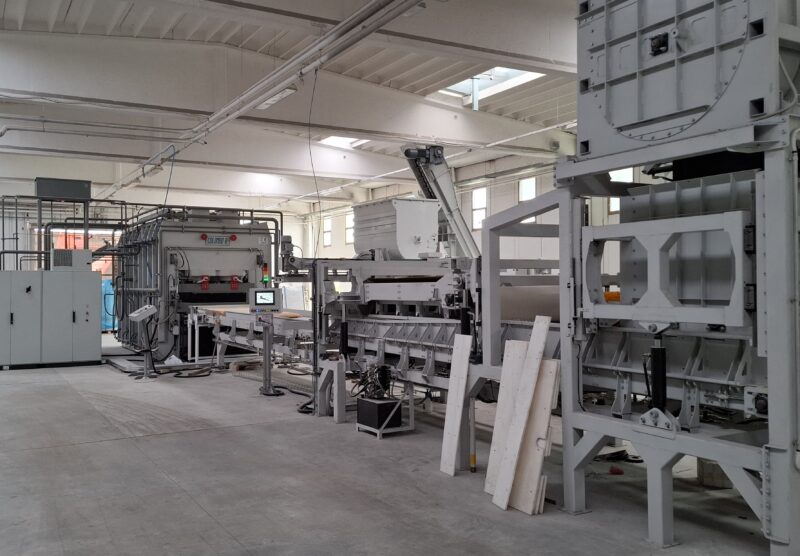
REFRESH participates in WindEnergy Hamburg as member of Wind Innovation Cluster Hub
REFRESH at WindEnergy Hamburg 2026